Our archaeological dig into the human sciences continues; join us next Monday, 15 June, 4pm, at The Bourgeois Pig (red line: Fullerton), for Foucault’s The Order of Things (chapter 6, Exchanging, and chapter 7, The Limits of Representation). We’ll plan to finish the book for the week after.
words and things: speaking, classifying
Our session on Foucault’s The Order of Things proved rousing; we’re going to continue with chapters 4 and 5 (“Speaking”; “Classifying”). Join us again next Monday, 8 June, at 4pm, at Moody’s Pub (in the garden, weather permitting). As always, InterCcECT welcomes proposals for summer projects; find us on Facebook or send us an email.
Filed under Reading Groups
words and things
After his critique of the clinic, and as a prolegomena to his theory of power, Michel Foucault outlined a distinct regime of knowledge that pivoted upon a new concept of “representation” – a Kantian sense of the limits of mental representations and the promise of formal representations. Modern knowledge, for the archaeological Foucault of Les Mots et Les Choses (translated as The Order of Things), is distinguished not only by its representational ethos, but by its agency in generating and congealing worldly relations: once words are thinkable as representation rather than as coincident with things, “discourse” is thinkable as a force of ordering things.
InterCcECT kicks off summer with a multi-session reading group on this crucial moment in Foucault’s thought. Join us Monday June 1st at 4pm, in the garden at Moody’s Pub (red line: Thorndale). We’ll be starting with the first three chapters from Part 1 of The Order of Things (Las Meninas, The Prose of the World, & Representing). Contact us for the readings.
What are your summer ambitions? As always, we welcome proposals and initiatives for events ranging from reading groups to field trips, works-in-progress sessions to pub afternoons.
In our sights:
Elizabeth Grosz, Nietzsche and Amor Fati May 6
Lee Edelman, with Lauren Berlant and Michelle Wright, May 7 & 8
Filed under Reading Groups
Expelling the Demos
If dramatic inequality and profound immiseration are the phenomenological appearance of the manifold contemporary economic technologies for extracting surplus value and enacting surplus populations, these ever more primitive accumulations require thinking beyond the usual terms of “injustice” and “poverty.” Saskia Sassen has recently proposed the paradigm of “expulsion” to understand today’s plutocratic brutality.
In the domain of politics, Wendy Brown has similarly suggested that “the demos” has been expelled from democracy. What are the interrelations of these dynamics? InterCcECT is delighted to host a mini-seminar on these questions with Professor Ignacio Sanchez Prado, who will guide us through the first chapters of Undoing the Demos: Neoliberalism’s Stealth Revolution and Expulsions: Brutality and Complexity in the Global Economy.
4pm, 4 May, Institute for the Humanities, UIC
request readings from interccect at gmail dot com
While he’s in town, Professor Sanchez Prado will also give a talk at the University of Chicago on 5 May, “The Golden Age Otherwise: Cosmopolitanism and Mexican Cinema, circa 1950”
this week:
23-24 April, Radical Poetics
24 April, Salvage 2.0: Meanings/Material/Value
Filed under Uncategorized
Poor Sovereignty
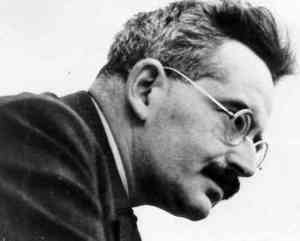
Sovereign aesthetics, aesthetics of sovereignty, the power of the image, the poverty of the image, the state of exception, the real exception to the image –Arne De Boever’s new work on art history’s contribution to the philosophy of sovereignty invigorates and severs the too easily assumed connections between Walter Benjamin and Susan Sontag that organize contemporary discourses of image politics. Join us for a workshop with Professor De Boever Tuesday 17 March, 5pm, generously hosted by our collaborator Gallery 400. Reading circulated in advance; request it here.
Arne’s abstract:
This article deals with the afterlife of Walter Benjamin’s comments on the state of exception—specifically, his distinction between the state of exception and what he calls a “real” state of exception that would dismantle the former–in Susan Sontag and Hito Steyerl’s theories of the image. It argues, first, that Sontag’s theory of the image, while conceived in Benjamin’s wake, insists on the reality of an outside-image that always risks to create new states of exception. While Steyerl, also working after Benjamin, goes a long way towards dismantling this risk, she too recreates it in her casting of the unreal people in spam images as those who will do the dirty work of imaging for us so that we, the real people, can withdraw from representation. This logic of substitution, which does not change what Steyerl in her work diagnoses as the “exceptional” conditions of contemporary imaging, does not succeed in bringing about the real state of exception that Benjamin called for. For this, the logic of substitution would need to be abandoned. Benjamin himself suggested this in his discussion of strike in his essay “Critique of Violence”. After the strike, Benjamin argues, it is us—i.e., not someone else—who go back to work. But the work has been “wholly transformed”.
Be on the lookout for another Rancière session soon; as always, drop us a line to propose events; and for now, here’s what’s
on our calendar:
2 March, Atmospheres
3 March, Charles Palermo,Photography and Modernism
5 March, Adam Kotsko, Creepiness
5-8 March, Narrative theory conference in Chicago
Filed under Lectures, Miniseminars
Promise of a New Day
“There exists a specific sensory experience that holds the promise of both a new world of Art and a new life for individuals and the community, namely, the Aesthetic.” – Jacques Rancière, Dissensus.
InterCcECT is pleased to announce two upcoming events aimed at warming up winter with some fiery thinking on aesthetics and politics.
First, 16 Feb, join us for a Rancière reading group. We will focus on two chapters that encapsulate his project of the past decade, “The Aesthetic Revolution and Its Outcomes” & “The Paradoxes of Political Art.” 4:30-6:00pm at The Map Room, 1949 N Hoyne Ave (Blue Line Western; Damen, Armitage, Western, and Milwaukee buses). Contact us for readings.
Second, 17 March, we’ll host a workshop on contemporary theory with visiting critic Arne De Boever. The workshop is generously co-sponsored by Gallery 400; meet us there at 5pm.
Till then, a few highlights around town:
6 Feb, Elizabeth Freeman, Sex in the Age of Mechanical Reproduction
12 Feb, Sector 22337, “Everything is Still Really Interesting”
19 Feb, Glenda Carpio, On Kara Walker’s “A Subtlety, or The Marvelous Sugar Baby”
6 March, Adam Kotsko, “Creepiness”
Filed under Miniseminars, Reading Groups
The State and World History
What remains of the theory of the state, after the laments of sovereignty and the ecstasy of vitalism? We’re taking our dialectic to the streets, to Hegel’s Philosophy of Right and its culminating vision of world historical formations.
Join us Wednesday 20 August, 12 noon, at our favorite civic institution of late, the Wicker-Park/Bucktown Public Library meeting room. Contact us for the readings, and to propose future events, alternate locations, and different states of things.
Filed under Reading Groups
What is a refrain? repetition, difference, dialectic and the knell of Hegel
The myriad blows dealt the dialectic cannot arrest its motion; the movement and form exceed the pugilists’s conceptualizations – and therein consists a powerful affinity with one of its great interlocutors, deconstruction. Glas, Jacques Derrida’s fabulously probing study of genre in Hegel and Genet, is 40 years old this year, yet the encounter between deconstruction and the dialectic could not be more new.

Join InterCcECT as we continue our dialectical summer: Wednesday, 23 July, 12noon, Bucktown-Wicker Park library study room. The text of Glas is out of print (new translation in the works), so let us know if you need a copy. If you want to read more deliberately, the Paul of Tarsus working group is accompanying us for our meeting, but holding sessions on smaller sections in the interim.
Where does the dialectic lead you? As always, follow us on Facebook or contact us to propose events.
May we recommend a field trip? Magritte: commenced this week, defamiliarizing objects and signifiers alike.
Filed under Uncategorized
self-differing Hegel
Totalizing, teleologizing, triadic: standard readings of Hegel’s Phenomenology of Spirit are monotone. In The Hegel Variations, Fredric Jameson re-encounters the rhythm and dynamism of the text, reprising the fluidity of the negative. Come tune your dialectic with InterCcECT at our first reading group of the summer, Wednesday 25 June, 12noon, Bucktown-Wicker Park Public Library Study Room.
What’s on your reading/talking/writing/making list? Contact us to propose summer collaborations, or to request the texts.
Filed under Uncategorized
Where does a literary work come from?
InterCcECT rejoices to return from winter break to a new year of inquiry. We get started this week rather quickly, with a newly scheduled practice job talk :
InterCcECTer Audrey Wasser presents”Problem and Genesis: On Beckett’s Proust,” in which she reads Samuel Beckett’s Molloy and his writings on Proust to pursue a series of interlocking questions: What is the genesis of a literary work? How do we understand the autonomy and integrity of a literary work with respect to its influences and causes? Is a notion of causation, in fact, completely inappropriate to literature? Must a work’s autonomy be conceived by means of a negation of all of the conditions that gave rise to it?
Join us at 4:00pm Friday 24 January, U of Chicago campus, Classics, Room 110 (1010 E 59th St).
Fulfill your new year’s theory resolutions! Write interccect at gmail dot com to propose collaborations, and check out our calendar for recommendations like:
Kant’s Conception of Number: A Summing Up
Filed under Lectures