
When both scientism and the so-called “post-critical” movement are ascendent, what can possibly be the purchase of psychoanalysis? 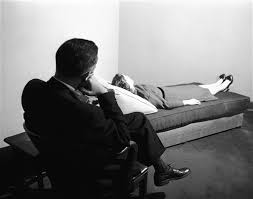 Alenka Zupancic is going to tell us! Join us Tuesday 14 June for a reading group on her very short book “Why Psychoanalysis: Three Interventions.” We’ll meet in the garden at Handlebar at the luxuriantly summery hour of 3pm. Drop a note to interccect at gmail for the readings.
Category Archives: Reading Groups
Why Psychoanalysis?
Filed under Reading Groups
Symptom, Scale, World: 3 sessions on theory and criticism
InterCcECT compatriot`V21 Collective is hosting a series of reading groups this summer on debates in literary theory and criticism, including psychoanalysis and postcritique, world-systems theory and world literature, and distant reading.  Check out the syllabus below and see v21collective.org for more details; the first session is June 21.
SYMPTOM
Sigmund Freud, An Analysis of a Case of Hysteria
Fredric Jameson, The Political Unconscious (excerpt)
Eve Sedgwick, “Paranoid Reading and Reparative Reading”
WORLD
H.G. Wells, The Time Machine
Immanuel Wallerstein, World Systems Analysis: An Introduction (excerpt)
Jason Moore, Capitalism and the Web of Life (excerpt)
SCALE
Immanuel Kant, “On the Mathematical Sublime”
Franco Moretti, “Graphs, Maps, Trees”
Mark McGurl, “The Posthuman Comedy”
Julie Orlemanski, “Scales of Reading”
Filed under Reading Groups
Encyclicals: Hegel continues
 Join us for another session on Hegel’s Encyclopedia Logic, this Friday, 13 May, 3pm at The Bourgeois Pig (Red Line: Fullerton). We’ll continue with Sections 19-36 – let us know if you need the readings. And contact us to propose additional summer events!
Filed under Reading Groups
peoples and parties: the state of anti-statism
What formations of the people would amount to collective sovereignty, rather than the mere management of populations? How can the party or the state be rethought in our era of obscene electoral politics and pervasive state violence? What distinguishes academic anti-statism from market-fundamentalist disintegration of the state?
InterCcECT hosts a special reading group session featuring selections from Jodi Dean’s Crowds & Party and Michel Foucault’s The Birth of Biopolitics, facilitated by Daniel Zamora (of Foucault & Neoliberalism notoriety).
Join us Tuesday 29 March, 4pm, UIC Institute for the Humanities (Stevenson Hall basement, 701 S Morgan St, Blue Line: UIC Halsted).
Materials available by request: interccect at gmail.
Filed under Reading Groups
Describing Description: varieties of post-critical reading
Foremost among the methods promoted in the new critical modesty is “description” – a form of attention to textual surface billed as an alternative to interpretation, with its putative depth tendencies.  What is the description of a literary text? Where does critical description meet literary description? In what is a literary text engaged, and what does it forswear, when it describes?
InterCcECT highlights the V21 Collective‘s pre- symposium reading group on Description & the Postcritical Turn.
Readings include passages of description from Dickens, Hardy, and Wilde, along with essays on description in literature and description as method by Lukacs, Latour, and Love. The session is Monday 21 September, 3-5pm, DePaul Library Rosati Room (Room 300, 2350 N Kenmore, Redline: Fullerton). Contact v21collective at gmail for the readings.
Filed under Reading Groups
Form & Formalism, then and now
InterCcECT highlights the V21 Collective‘s pre- symposium reading group on Form & Formalism.  Selections from George Eliot, Cleanth Brooks, and Caroline Levine are on the table; session is Friday 21 August, 3-5pm, DePaul Library Rosati Room (Room 300, 2350 N Kenmore, Redline: Fullerton). Contact v21collective at gmail for the readings.
Filed under Reading Groups
tear it down: The Undercommons
Amidst growing protests against systemic and state-administered premature death, and beyond #hashtagactivism, calls for a new black radicalism are resounding. In The Undercommons: Fugitive Planning and Black Study, Stefano Harney and Fred Moten advocate for “the undercommons” as a subject of such radicalism, “the prophetic organization that works for the red and black abolition…not so much the abolition of prisons but the abolition of a society that could have prisons, that could have slavery, that couple have the wage, and therefore not abolition as the elimination of anything but abolition as the founding of a new society.” 
Join InterCcECT for a reading group on The UnderCommons, chapters 0-6, on Thursday 9 July, 4pm (purchase the text or follow the link to a free version made available by the publisher).
VENUE CHANGE: La Haven Coffee, 1241 S Michigan. (Roosevelt station)
Filed under Reading Groups
after the modern
In The Order of Things, Foucault meticulously, if idiosyncratically, catalogues epistemic shifts from resemblance to representation to History, regimes of knowledge corresponding to ages of the world. At the time of writing, nearly 50 years ago, he located his work in the still-unfolding modern episteme. Are we now modern? Join us for the conclusion of our reading sessions, Monday 22 June, 3pm (note earlier time), at The Bourgeois Pig.
What are your summer theory projects? Contact us to propose events!
Filed under Reading Groups
words and things: speaking, classifying
Our session on Foucault’s The Order of Things proved rousing; we’re going to continue with chapters 4 and 5 (“Speaking”; “Classifying”). Join us again next Monday, 8 June, at 4pm, at Moody’s Pub (in the garden, weather permitting). As always, InterCcECT welcomes proposals for summer projects; find us on Facebook or send us an email.

Filed under Reading Groups
words and things
After his critique of the clinic, and as a prolegomena to his theory of power, Michel Foucault outlined a distinct regime of knowledge that pivoted upon a new concept of “representation” – a Kantian sense of the limits of mental representations and the promise of formal representations. Modern knowledge, for the archaeological Foucault of Les Mots et Les Choses (translated as The Order of Things), is distinguished not only by its representational ethos, but by its agency in generating and congealing worldly relations: once words are thinkable as representation rather than as coincident with things, “discourse” is thinkable as a force of ordering things.

InterCcECT kicks off summer with a multi-session reading group on this crucial moment in Foucault’s thought. Join us Monday June 1st at 4pm, in the garden at Moody’s Pub (red line: Thorndale). We’ll be starting with the first three chapters from Part 1 of The Order of Things (Las Meninas, The Prose of the World, & Representing). Contact us for the readings.
What are your summer ambitions? As always, we welcome proposals and initiatives for events ranging from reading groups to field trips, works-in-progress sessions to pub afternoons.
In our sights:
Elizabeth Grosz, Nietzsche and Amor Fati May 6
Lee Edelman, with Lauren Berlant and Michelle Wright, May 7 & 8
Filed under Reading Groups


