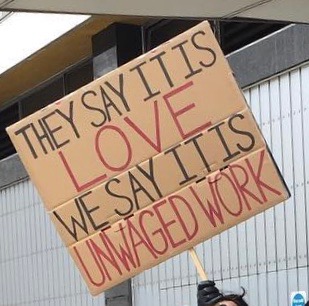
Service economy, helping professions, care work, affective labor. For at least two hundred years, feminist and marxist theories of social reproduction have underscored the unwaged, unvalorized, unappreciated exertions that make the quotidian happen, that uphold the infrastructures of the present for the future, that give life. Now the contemporary finds that labor not only unofficial, but delegitimized, not only under-compensated but over-burdened to the point of disaster. Whence arises the image of the lazy greedy feminine public employee, welfare queen, unfireable teacher? How long can dystopia hold?
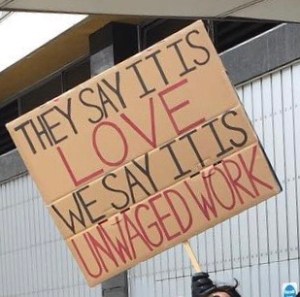
This International Women’s Day, InterCcECT invites you to commune with us over feminist words. We’ll read Tithi Battacharya’s Social Reproduction Theory primer, and selections from Sara Ahmed’s Living a Feminist Life, and discuss Thursday April 19th, 5pm-7pm, at Ambassador Public House (back room), 310 S Halsted (Blue Line: UIC Halsted). Contact us for PDFs.
As always, send us proposals for events, field trips, works-in-progress, techniques of survival.
On our calendar:
10 March The Withering of the State, with Corey Robin keynote
16 April Eduardo Cadava, Learning to See
18 April Maria Acosta and Fanny Soderback, Underrepresented Groups in Philosophy
photo: Amy De’Ath





 InterCcECT allays summer angst with a special session on Jaques Lacan’s recently translated Seminar X: Anxiety, led by
  Alenka Zupancic is going to tell us! Join us Tuesday 14 June for a reading group on her very short book “Why Psychoanalysis: Three Interventions.” We’ll meet in the garden at
  Check out the syllabus below and see
  Join us for another session on Hegel’s Encyclopedia Logic, this Friday, 13 May, 3pm at The Bourgeois Pig (Red Line: Fullerton). We’ll continue with Sections 19-36 – let us know if you need the readings. And contact us to propose additional summer events!
 InterCcECT